
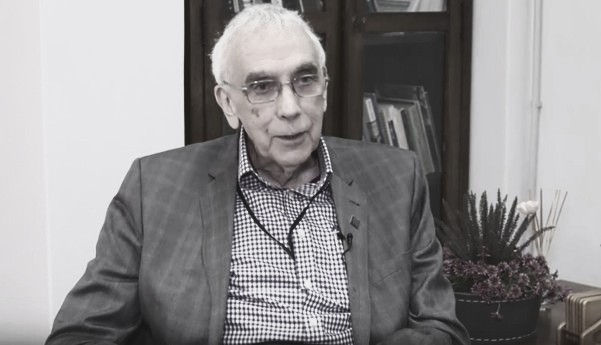
tony allan bw osce micky kroell cropped processed by imagy

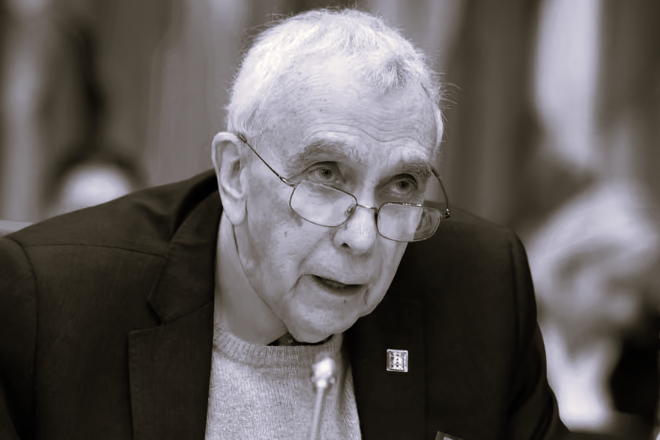
This obituary commemorates the life and work of Tony Allan (1937–2021), a British geographer whose concept of “virtual water” transformed global understanding of water resource management, agriculture, and international trade. Allan demonstrated that water-intensive products effectively transfer water resources across borders, enabling water-scarce regions, particularly in North Africa and the Middle East, to mitigate shortages through trade rather than conflict.

His research challenged conventional approaches focused on engineering solutions and emphasized the interconnected relationships among water, food production, economics, governance, and global markets.

Throughout his academic career at SOAS University of London and King's College London, Allan advocated for sustainable resource management, greater recognition of environmental costs in food systems, and collaboration among governments, businesses, and civil society.

His influential ideas laid the foundation for modern water-footprint accounting and continue to shape environmental policy, corporate sustainability practices, and geographical education worldwide. The obituary highlights both his scholarly achievements and his lasting impact on debates surrounding water security, food systems, and environmental governance.
tony allan landingpage00

Global Systems Ameliorate Local Droughts: Water, Food and Trade

The paper will show that solutions can be found in ‘problemsheds’ when they cannot be found in ‘watersheds’. This concept is relevant with respect to short-term drought as well as to long-term water stress. The volumes of water transferred across the world via trade, embedded in water intensive commodities such as grain, are massive in terms of the occasional and accumulating water deficits experienced in water stressed regions.

Watersheds And Problemsheds: Explaining The Absence Of Armed Conflict Over Water In The Middle East

Miraculously, and above all silently, Middle East governments have been able to avoid the apparently inevitable consequences of their inherited water deficits, despite the fact that this is a life-and-death economic issue for them and their peoples. How these countries can continue to avoid such conflicts while fulfilling their needs is an important issue for the region.

Analysis based on watersheds has led to the misleading conclusion that water deficits will be the cause of major armed conflict in the Middle East. Yet water has not been even a minor element in a regional conflict scenario for over a quarter of a century.

IWRM/IWRAM: a new sanctioned discourse?

The purpose of this study is to show how water resource allocation and management
policies evolve in contentious arenas. It will situate the integrated water management
approach in a water policy narrative. The agents who operate in these policy arenas
reflect special interests and concerns.

Virtual Water – the Water, Food, and Trade Nexus Useful Concept or Misleading Metaphor?

The purpose of this contribution is first, to respond to the request for clarification of the term virtual water by Stephen Merrett. Second, it provides a narrative for those who might not be aware of the origin and development of the concept. Third, the discussion will draw attention to the problems encountered in gaining entry for the idea into those water policy discourses where the it was most relevant.

‘Virtual water’: a long term solution for water short Middle Eastern economies?

The paper addressees the issue – why has there been no war over water when many economies in arid regions have only half the water they need and many leading figures, King Hussein, Boutros Boutros Gali, have warned that there would be a water war? It will show that the Middle East region has been able to access water in the global system via trade. Economic systems, not the evidently inadequate hydrological systems, have solved the water supply problem for the region. Water in the global trading system is know a ‘virtual water’.

Make a Lasting Impact Today

Join a global community and support the continuation of Tony Allan’s influential scholarship on water and food systems.