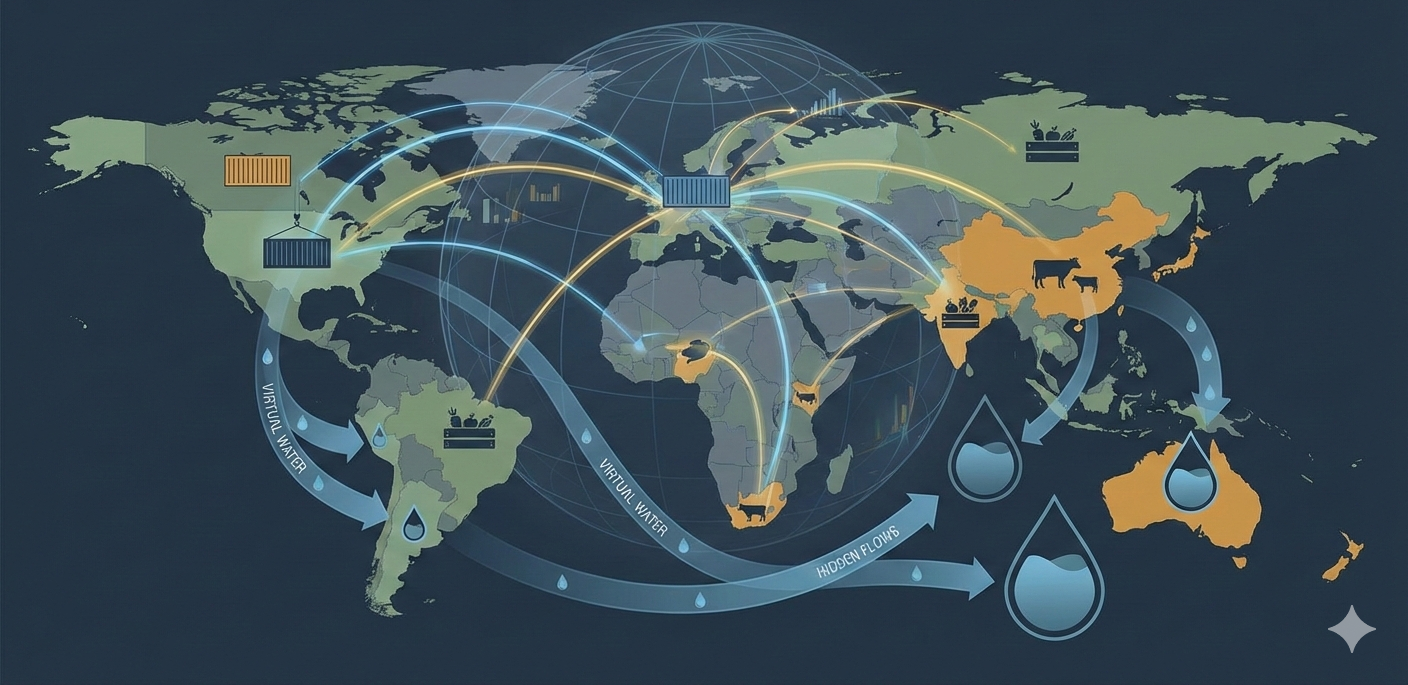
Virtual Water.
Real Impact.
The unseen water behind what we grow, buy, and consume, and why it matters.
Virtual Water Concept
The virtual water concept was developed by John Anthony Allan to explain how water is effectively embedded in food and other traded commodities.
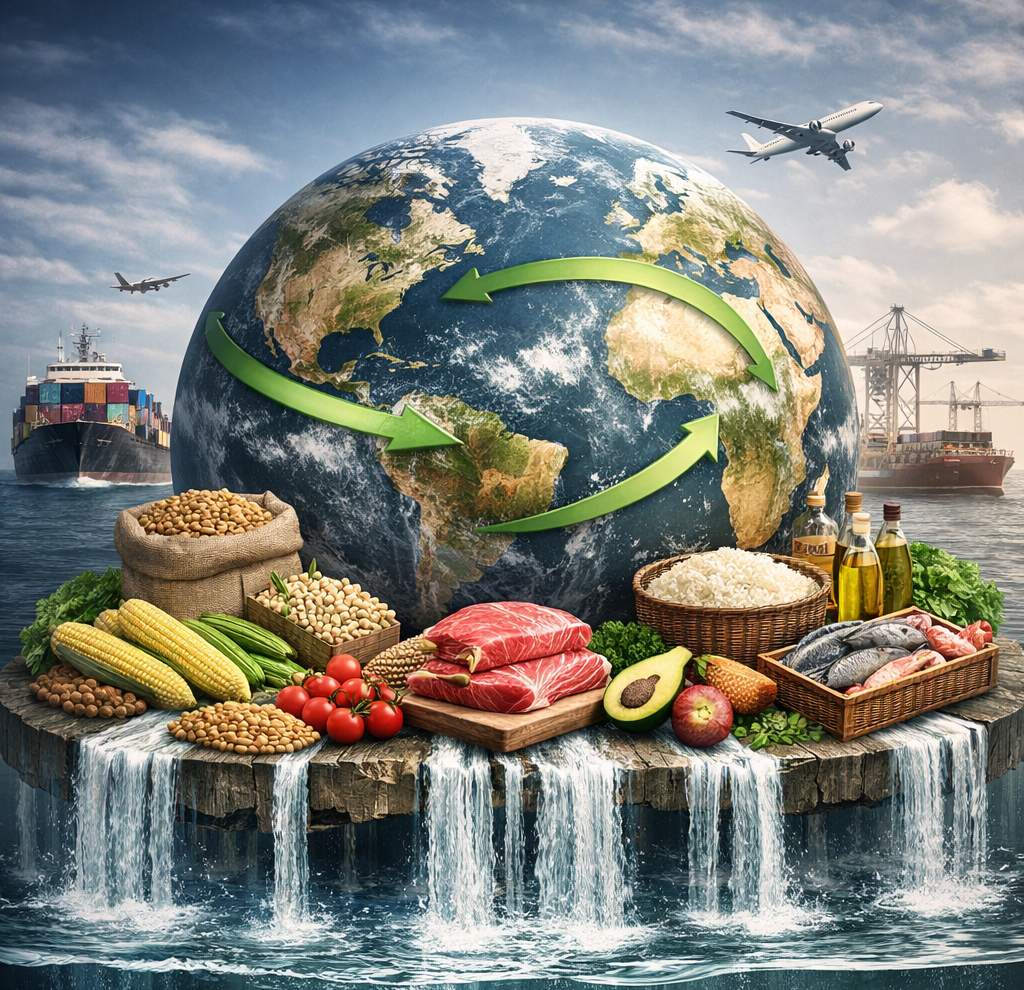
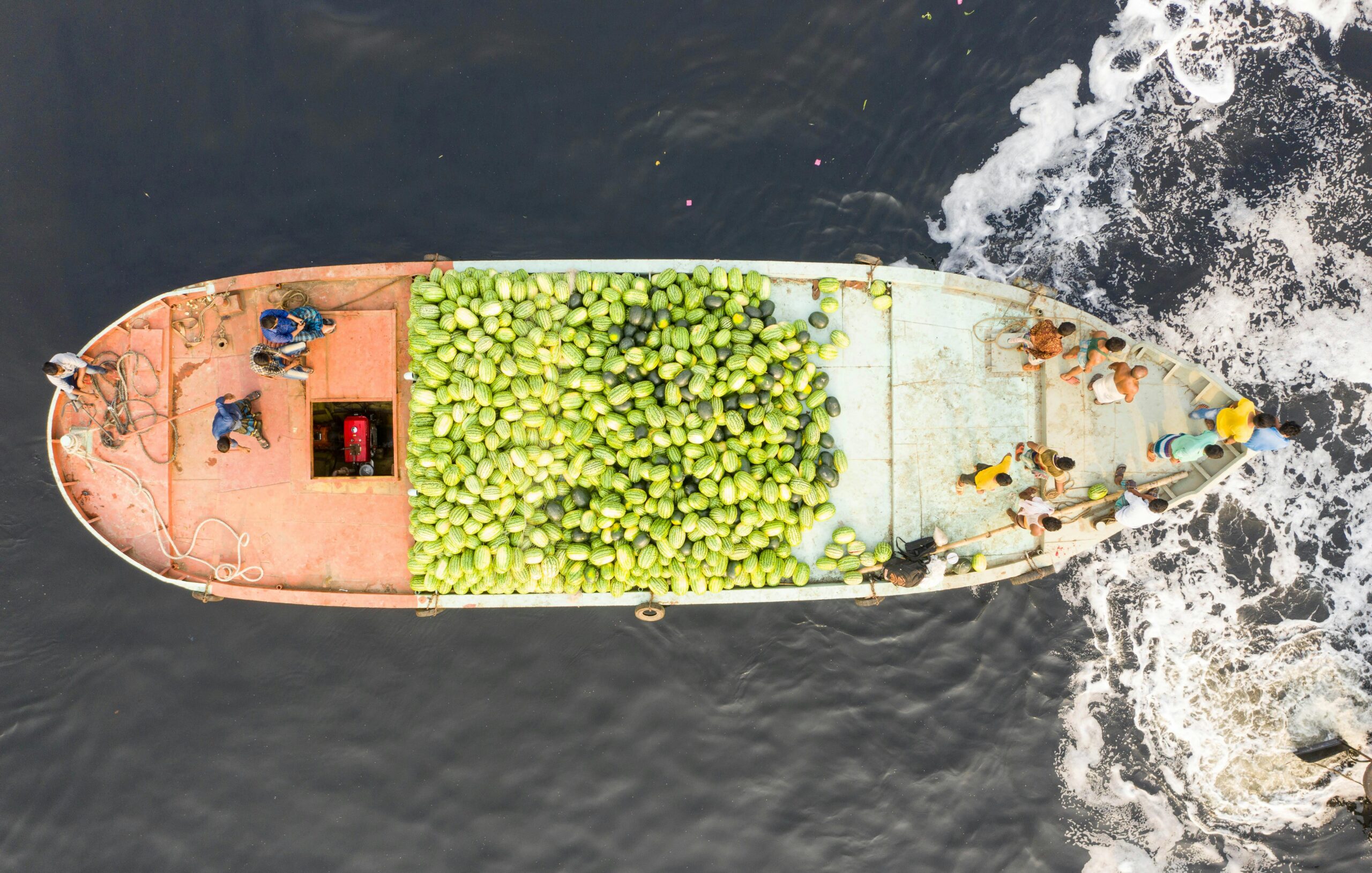
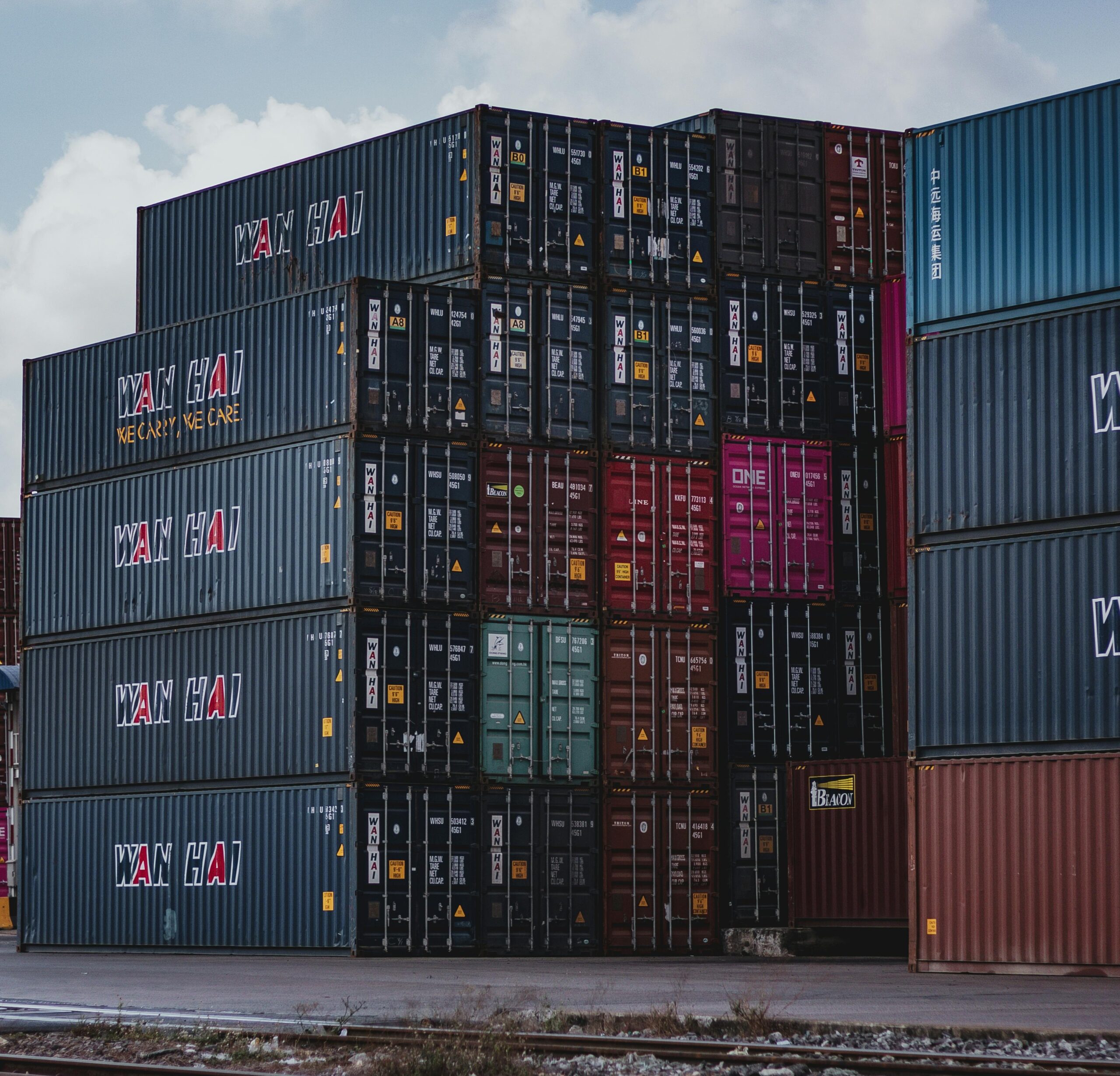
When a country imports crops such as wheat, rice, or maize, it is also importing the large volumes of water used to produce those crops, even though that water never physically crosses national borders.
Virtual Water and Water-Scarce Regions
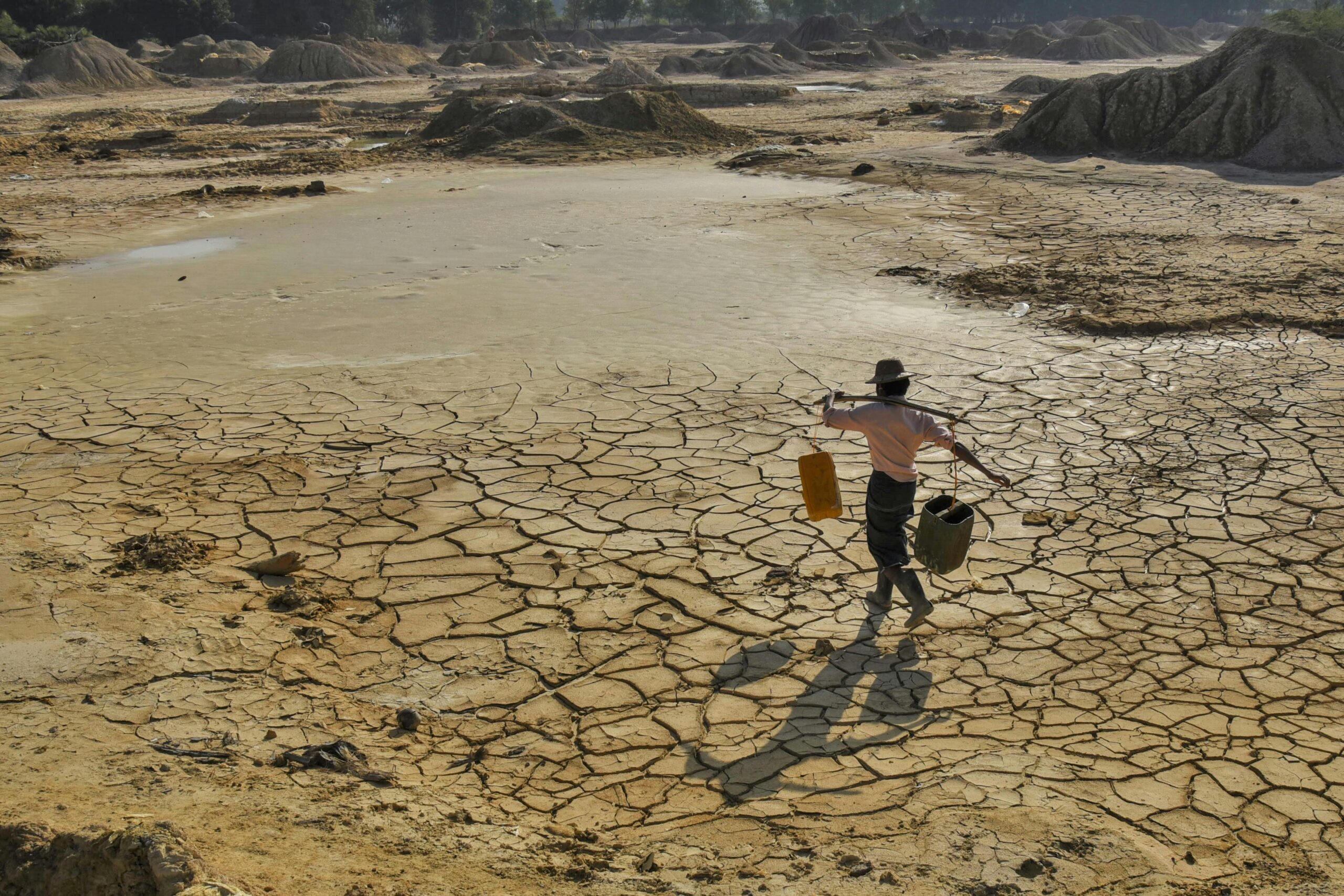
In water-scarce regions, particularly in the Middle East and North Africa, virtual water trade has long played a crucial but largely unrecognized role in ensuring food security.
Rather than relying solely on domestic water resources to grow food, many countries meet a substantial share of their food needs through international markets. In doing so, they reduce pressure on local rivers, aquifers, and irrigation systems, while reallocating scarce water to urban, industrial, or environmental uses.
Virtual Water as a Political and Economic Issue
Virtual water reframes water scarcity as a political and economic challenge, not simply a physical one. It highlights the importance of income, trade relations, and access to global markets in shaping water security outcomes.
Countries with limited water but sufficient purchasing power can effectively “outsource” water-intensive food production, while poorer or trade-constrained countries remain more vulnerable to water stress and food insecurity.

Rethinking Food Self-Sufficiency
A key contribution of the virtual water concept is that it challenges the assumption that national food self-sufficiency is always desirable or feasible in arid regions.
Instead, it shows that strategic food imports can function as an adaptive response to water scarcity, often at lower social and environmental cost than large-scale irrigation or water-transfer schemes.
Rethinking Food Self-Sufficiency
A key contribution of the virtual water concept is that it challenges the assumption that national food self-sufficiency is always desirable or feasible in arid regions.
Instead, it shows that strategic food imports can function as an adaptive response to water scarcity, often at lower social and environmental cost than large-scale irrigation or water-transfer schemes.